Health Care Assistant
Online theory with in-person labs and clinicals
Up to $24-$30/hour in private facilities and $29.83/hour in BC health authorities
Start: January, May, and September
26 weeks, including 8 weeks of practicum
BC Care Aide & Community Health Worker Registry
Surrey, Kelowna, Kamloops, and Prince George
About the Career
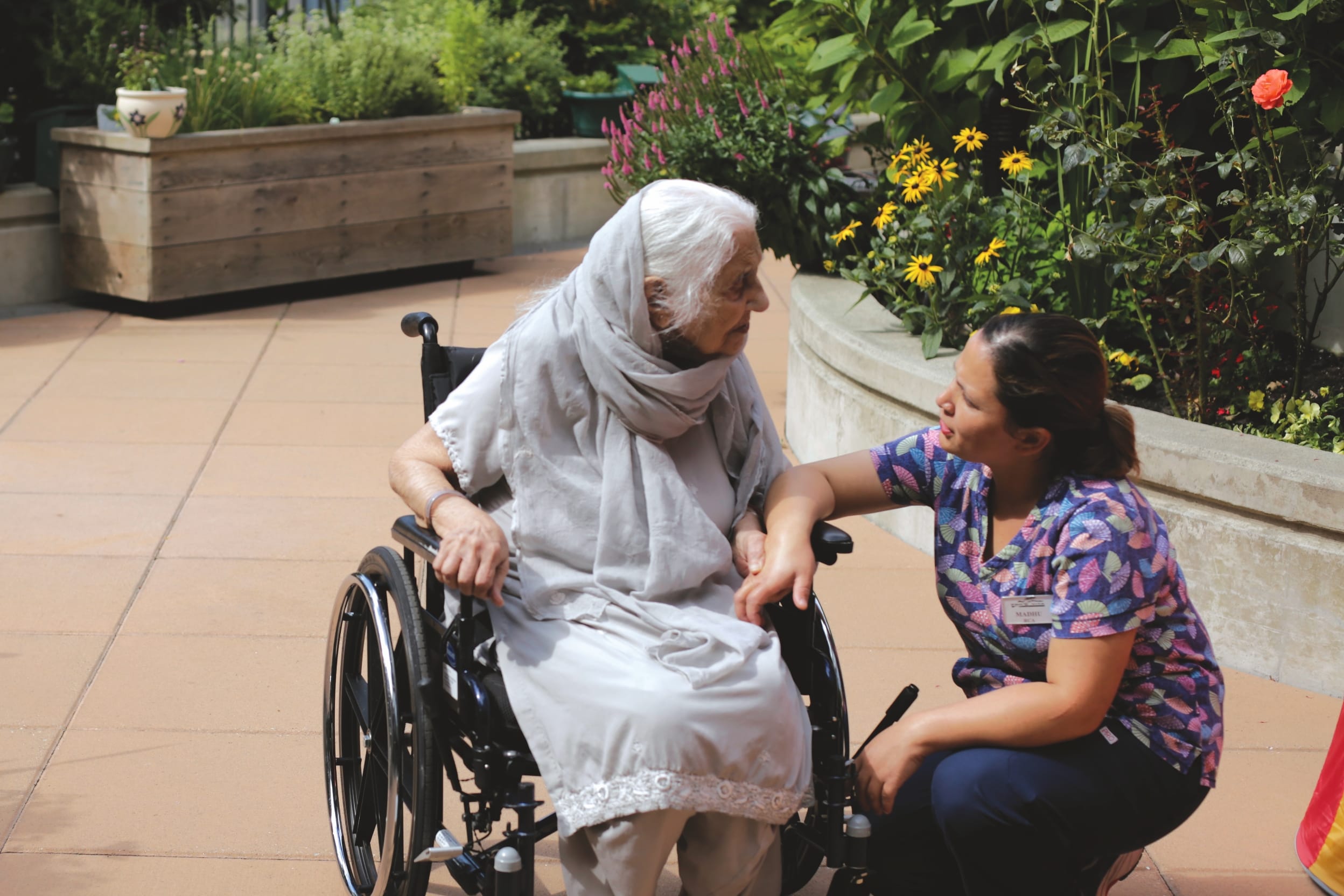
As a Health Care Assistant (HCA), you will be the primary caregiver, helping elderly individuals maintain a level of independence and improving their quality of life.
Upon graduation, you will be registered with the BC Care Aide & Community Health Worker Registry, allowing you to work in publicly funded health care settings in B.C
Potential Employers
After graduating from our 26-week Health Care Assistant certificate program, you will find employment in:
Hospitals and community agencies
Residential, extended and intermediate care facilities
Home support agencies
Adult care centre for seniors
Assisted living residences
About the Program
Our Health Care Assistant (HCA) program follows the government-developed curriculum, and is recognized by the BC Care Aide & Community Health Worker Registry. Incorporating theory and hands-on training in a high-fidelity simulation lab, this six-month program prepares you to support older adults in independent, assisted, extended and palliative care.
For some, this will be a career for life. Others may decide to further their careers and become a Licensed Practical Nurse (LPN) through our LPN diploma program.
Related Programs
Accreditation and Recognition
Stenberg College is designated by the BC government's Ministry of Advanced Education through the Private Training Institutions Regulatory Unit (PTIRU). This program is approved by the PTIRU of the Ministry of Post-Secondary Education and Future Skills. PTIRU is responsible for setting standards of quality and ensuring consumer protection. Stenberg College has also received the BC government's Education Quality Assurance (EQA) designation, which is BC's brand or "seal" of quality post-secondary education for public and private institutions.

Admission Requirements
- Grade 10 graduation or 19 years of age
- Proof of meeting HCA Program Entry – Entry Language Competency Requirements
- Completion of a Criminal Record Review consent form under the Criminal Record Review Act as part of the application process
Applicants who provide evidence of three years of full-time instruction in English* must also provide proof of one of the following:
- Completion of Grade 10 English (or higher). A minimum of a C grade is acceptable.
- Completion of college courses determined to be equivalent to Grade 10 English (or higher) by post-secondary institutions. A minimum of a C grade is acceptable.
- ACCUPLACER Next Generation Test Results: Reading 230, Writing 230 and Writeplacer 4
*Defined as three (3) years of full-time secondary and/or post-secondary education at a recognized institution on the list of Approved English Speaking Countries. Secondary education will be considered starting from grade 8. English as a Second Language (ESL) courses will not be considered.
Applicants who cannot provide evidence of three years of full-time instruction in English* are required to provide proof of one of the following standardized proficiency tests from an authorized assessment agency:
- Canadian Language Benchmarks Placement Test (CLBPT) – in person or remote. Test in the last year. Listening 7, Speaking 7, Reading 6 and Writing 6.
- Canadian English Language Proficiency Index Program (CELPIP General). Test in the last two years. Listening 7, Speaking 7, Reading 6 and Writing 6.
- International English Language Testing System (IELTS Academic, IELTS General or IELTS Academic Online). Test in the last two years. Overall score of 6 with a minimum of 6 in Speaking and Listening and no score lower than 5.5 in Reading and Writing.
- Canadian Academic English Language Assessment (CAEL or CAEL Online). Test in the last two years. Overall Score of 60, with no section less than 50.
- The Test of English as a Foreign Language (TOEFL iBT or TOEFL iBT Home Edition). Test in the last two years. Overall score of 76 with no score lower than 20 in Speaking and Listening and no score lower than 18 in Reading and Writing.
- Pearson Test of English (PTE). Test in the last two years. PTE Academic – Overall score of 50 with no score lower than 50 in Speaking and Listening and no score lower than 45 in Reading and Writing. PTE Core – No score lower than 68 in Speaking, 60 in Listening, 51 in Reading and 60 in Writing.
In addition to the tests and scores listed above, recognized BC HCA Programs also have the discretion to accept HCA program applicants with one of the following:
- A CLB Report Card from a LINC Program indicating "Completing" CLB Speaking 7, Listening 7, Reading 7 and Writing 7 AND "Recommended Class Placement" as Speaking 8, Listening 8, Reading 8 and Writing 8.
- Canadian English Language Benchmark Assessment for Nurses (CELBAN) results (test in the last two years) with the following minimum scores: Speaking 7, Listening 7, Reading 6, Writing 6.
- Occupational English Test (OET): computer only (test in the last two years) with no score lower than C/280 in Speaking and Listening and no score lower than C/250 in Reading and Writing.
International Students
This program is eligible for those currently in Canada on a Work Permit.HCA students provide care to vulnerable clients in the practice education portion of the program and a clear police certificate from the country of origin is required prior to acceptance into an HCA program (admission requirement). This applies to all international HCA program applicants, including those currently residing in Canada. International students must get a police certificate from their home country, regardless of how long they have been residing in Canada. To meet practice education pre-requisites, they are also required to provide an acceptable criminal record check (CRC) from B.C.'s Criminal Records Review Program (CRRP). For further information regarding international police checks, click here.HCA is offered in-class for international students in the following formats:
- EAP+ Health Care Assistant with Co-op: 60 weeks (including a 16 week schedule break) *Paid Co-op (Optional) 22 weeks
- Health Care Assistant with Co-op: 48 weeks (including a 16 week schedule break) *Paid Co-op (Optional) 22 weeks
Student Diversity
Stenberg supports diversity in our student population, and we hold one seat per program for a self-identified Indigenous applicant who meets admission requirements. If the seat remains unfilled at 12 weeks prior to the program start, the seat will be released and offered to other qualified applicants.
Important Program Information
Please note that this program is not eligible for the post-graduate work permit program.
Program Courses
Orientation Workshop
This course will provide a comprehensive orientation to Stenberg College and the Health Care Assistant program you have enrolled in. As with all new things, there will be some challenges and excitement; this workshop covers student success skills where you'll learn effective study habits (specifically to improving both reading and writing skills) based on your own personal learning style. You will be able to navigate through Moodle efficiently. Upon completion of this workshop, you will be ready for learning in the online environment.
Clinical Prerequisite Certifications
This course includes certification workshops that you will be required to complete related to the essential industry-related training and certifications that are mandatory before you may begin your Practice Education. Students are required to attend (in-class) training facilitated by a contractor. In addition to this, the required online practice education prerequisites and additional certificates are listed below and will be done throughout the course.
Concepts for Practice
This course provides students with the opportunity to develop a theoretical framework for practice. Students will be introduced to the philosophical values and theoretical understandings that provide a foundation for competent practice as a Health Care Assistant. The course focuses on concepts of caring and person-centered care; basic human needs and human development; family, culture, and diversity as they relate to health and healing. Students will also be introduced to a problem-solving model that will be critical to their practice.
Interpersonal Communications
This course focuses on the development of self-awareness, increased understanding of others and development of effective interpersonal communication skills that can be used in a variety of care- giving contexts. Students will be encouraged to become more aware of the impact of their own communication choices and patterns. You will have the opportunity to develop and use communication techniques that demonstrate personal awareness, respect, and active listening skills.
Lifestyle and Choices
This course introduces you to a holistic concept of health and the components of a health-enhancing lifestyle. Students will be invited to reflect on your own experience of health, recognizing challenges and resources that can impact lifestyle choices. Students will be introduced to a model that can be applied in other courses to understand the multi-faceted aspects of health and healing.
Introduction to Practice
This course provides an introduction to the role of the HCA within the British Columbia health care system. Students will be introduced to the health care team and the roles and functions of HCAs within the team. Students will also have opportunities to develop self-reflective skills required for competent practice and will be introduced to effective job-finding approaches.
Common Health Challenges
This course introduces students to the normal structure and function of the human body and normal bodily changes associated with aging. Students will explore common challenges to health and healing in relation to each body system. Students will also be encouraged to explore person-centred practice as it relates to the common challenges to health and, in particular, to end-of-life care.
Personal Care and Assistance
This practical course offers students the opportunity to acquire personal care and assistance skills within the parameters of the HCA role. The course is comprised of class and supervised laboratory experiences which assist the student to integrate theory from other courses to develop care-giver skills that maintain and promote the comfort, safety, and independence of individuals in community and facility contexts.
Cognitive and/or Mental Challenges
This course builds on content from other courses to assist students to explore concepts and care giving approaches that will allow them to work effectively with individuals experiencing cognitive and mental challenges. The emphasis in this course is on supporting clients with dementia, recognizing responsive behaviors and identifying person-centered intervention strategies.
Clinical Placement in Multi-Level and/or Complex Care
This supervised Practice Education Placement provides students with an opportunity to apply knowledge and skills from all other courses in the program with individuals in a multi-level or complex care setting. A portion of this clinical experience will be devoted to working with individuals with dementia. Opportunity will be provided for students to gain expertise and confidence with the role of the HCA within a complex care facility.
Preceptorship Placement Multi-Level/Complex
Directly following the Clinical Placement Multi-Level/Complex Care, this 2 week supervised preceptorship will provide Students with the opportunity to put both their classroom learning and hands-on experience gained in the clinical setting into practice, as they move towards independence in the workplace. An opportunity will be provided for students to gain expertise and confidence with the role of the Health Care Assistant within a residential care facility and gain abilities that will prepare graduates to assume the role of a Health Care Assistant. Students will work closely with an experienced Health Care Assistant Preceptor who will act as a mentor to guide, encouraging students to apply insight, critical thinking skills and self-awareness in the reality of a work setting.
Career Search Strategies
In this course, you will learn to network effectively (online and in person), to search and apply for jobs, and to prepare targeted resumes and cover letters. You will be provided with coaching and individualized instructor feedback on your resume, cover letter, and interview skills.
Practice Experience in Home Support, Assisted Living, and/or Group Home Setting
This Practice Education Placement provides students with an opportunity to apply knowledge and skills from all other courses with individuals and families in a community setting. Opportunity will be provided for students to perform the caregiver role of the HCA within a Home Support, Assisted Living, and/or Group Home setting to gain abilities that will prepare graduates for employment in these settings. It is important that students understand the philosophy of community care settings and its emphasis on client choice and independence.
Red Cross Standard First Aid + CPR Level "C"
You will receive Red Cross Standard First Aid Certification including Standard First Aid and Cardiopulmonary Resuscitation (CPR) Level C.
FOODSAFE Level 1
You will learn how to prepare food in a way that protects people from injury or illness. Some of the topics covered are food-borne diseases, personal hygiene, and safe procedures for storing.
Provincial Violence Prevention Training Curriculum
The Provincial Violence Prevention Training Curriculum will teach you to recognize and respond to violent situations and learn about different types of violence and strategies for dealing with the risks in a variety of health care contexts. The Provincial Violence Prevention Curriculum has been developed by a team of experts from WorkSafeBC, the Occupational Health & Safety Agency for health care in BC, as well as BC health authorities and healthcare unions. This training and certification is offered in collaboration with Fraser Health Authority.
Dementia Care: Fundamental Knowledge, Skills and Competencies for Providing Person-Centred Care
For people with dementia, our understanding of "caring" takes on an expanded meaning. We need to pay special attention to knowing the "person behind the disease" because this individual may not be able to verbally express his or her needs, preferences, values, fears and hopes. The content of the learning modules will give you the knowledge, tools and confidence to understand the needs of, and effectively care for, persons with Alzheimer Disease and related dementias.
Workplace Hazardous Materials Information System (WHMIS)
WHMIS provides information about hazardous materials in the workplace, such as cleaning agents, compressed gases, and flammable materials. Becoming WHMIS certified will demonstrate the ability to identify hazardous materials and handle them properly.
Taking Ownership in Palliative Care (Pallium Canada)
Taking Ownership is a Pallium Canada interactive module for health care professionals that takes about 40 minutes to complete. The goal is to encourage health care professionals from different disciplines to make primary-level palliative care a part of their daily work.
Mental Health Challenges Certificate
This course provides you with a strong familiarity with the most commonly diagnosed mental health challenges. You will gain knowledge of the differences between normal sadness and major depression. The signs and symptoms of major depression, anxiety disorders, mood disorders, Schizophrenia, Personality Disorders, Substance abuse disorders and dual or multi diagnoses. You will also gain knowledge and insight on ways to help and support people have these mental health challenges. You will gain an understanding of the myths and stigmas, cultural differences and how to care for the person and family with mental health challenges.
Medication Management for Health Care Assistants Certificate
This course provides you with a strong base knowledge of medication management techniques, assisting clients with medication and documentation. Building on your existing knowledge of key medication terminology, medication safety and drug classifications, you will conduct a more detailed examination of the pathophysiology of common conditions. The final component of this certification course will be an assessment of skills in medication assisting in the community and home support settings. Upon completion, you will have a strong foundation in which to further build your skillset in the workplace.
Body Mechanics & Back Safety Certificate
You will be educated in proper body movement to prevent and correct poor posture, reduce stress on ligaments, joints and tendons and enhance physical capabilities. Proper body mechanics and back safety will enhance the longevity and success in the workplace and will help ensure that transfers and positioning are done in a manner that is safe and appropriate for everyone. Please note: While this training follows best practices, graduates may also be required to learn and follow workplace specific protocols.
HCAs in Acute Care Settings Certificate
You will be discussing the similarities and differences between clients in acute care settings and clients in complex care or community settings. You will gain knowledge with the acute care environment by describing aspects of critical thinking and problem-solving that should be utilized when caring for individuals experiencing common health challenges. You will also learn the preparation, process and assisting guidelines with physical examination, gain knowledge with the differing types of equipment and how to report and record vital signs.
Recognizing and Responding to Adult Abuse Certificate
This course provides health care professionals with awareness to recognize, prevent and respond to adult abuse and neglect in the home and community care settings. This course is especially relevant when caring for older adults.
Providing Culturally Safe Care with an Indigenous Lens Certificate
This course supports health care professionals in meeting the Truth and Reconciliation Report Commission of Canada: Calls to Action. You will learn about Indigenous experiences and the impact of colonialism on accessing health care. You will also learn about Cultural Safety and the concept of Two-Eyed Seeing to better provide person-centred care.
Introduction to Digital Health Literacy Certificate
This course aims to strengthen health care professional's knowledge and skills needed to create, communicate and find information. You will also learn to navigate online resources safely and effectively.
Best Practices in Patient-Centered Clinical Documentation Certificate
You will learn best practices for clinical documentation recognizing inclusive, culturally safe, and person-centred language. These skills will enhance the health care professional's ability to use current workplace technology and support quality patient care.
Health Care Assistant Practice in British Columbia Certificate
This course provides an overview to HCA practice in British Columbia. You will gain knowledge of HCA roles and responsibilities, the importance of collaborative practice within the health care team, person-centred care, as well as legal, ethical and professional approaches to practice.
Vaccine Basics (SafeCareBC)
This course strengthens the health care professional's knowledge of vaccines and their role in important infection prevention and control practices. You will also learn how vaccines work, and how they are developed to support caring for vulnerable populations.
Student Support
- Academic tutoring
- Assessment and skill development support
- Open study skills tutorials
- Typing practice support
- One-on-one student support coaching sessions
- English language learning support
- Online learning resources
- Online academic journals and databases
- Campus life events
Stories from our Health Care Assistant grads







Loading stories...
Ask a Program Advisor
I understand that by submitting this form, I agree to receive periodic emails, phone calls and text messages (SMS) from Stenberg College. See our Privacy Policy. At any time you can opt out of SMS messaging by replying STOP. See our SMS Terms. Message and data rates may apply.
We're Here to Help
Our admissions advisors are here to help you find the right program and navigate your path to a rewarding career.
I understand that by submitting this form, I agree to receive periodic emails, phone calls and text messages (SMS) from Stenberg College. See our Privacy Policy. At any time you can opt out of SMS messaging by replying STOP. See our SMS Terms. Message and data rates may apply.
We're Here to Help
Our admissions advisors are here to help you find the right program and navigate your path to a rewarding career.
We use cookies to improve your experience and personalize ads. See our Privacy Policy.