Mental Health & Substance Use Worker
Online with local practicums
$21 to $35/hour
Start: Fall
33 weeks, including 6 weeks of practicum
About the Career
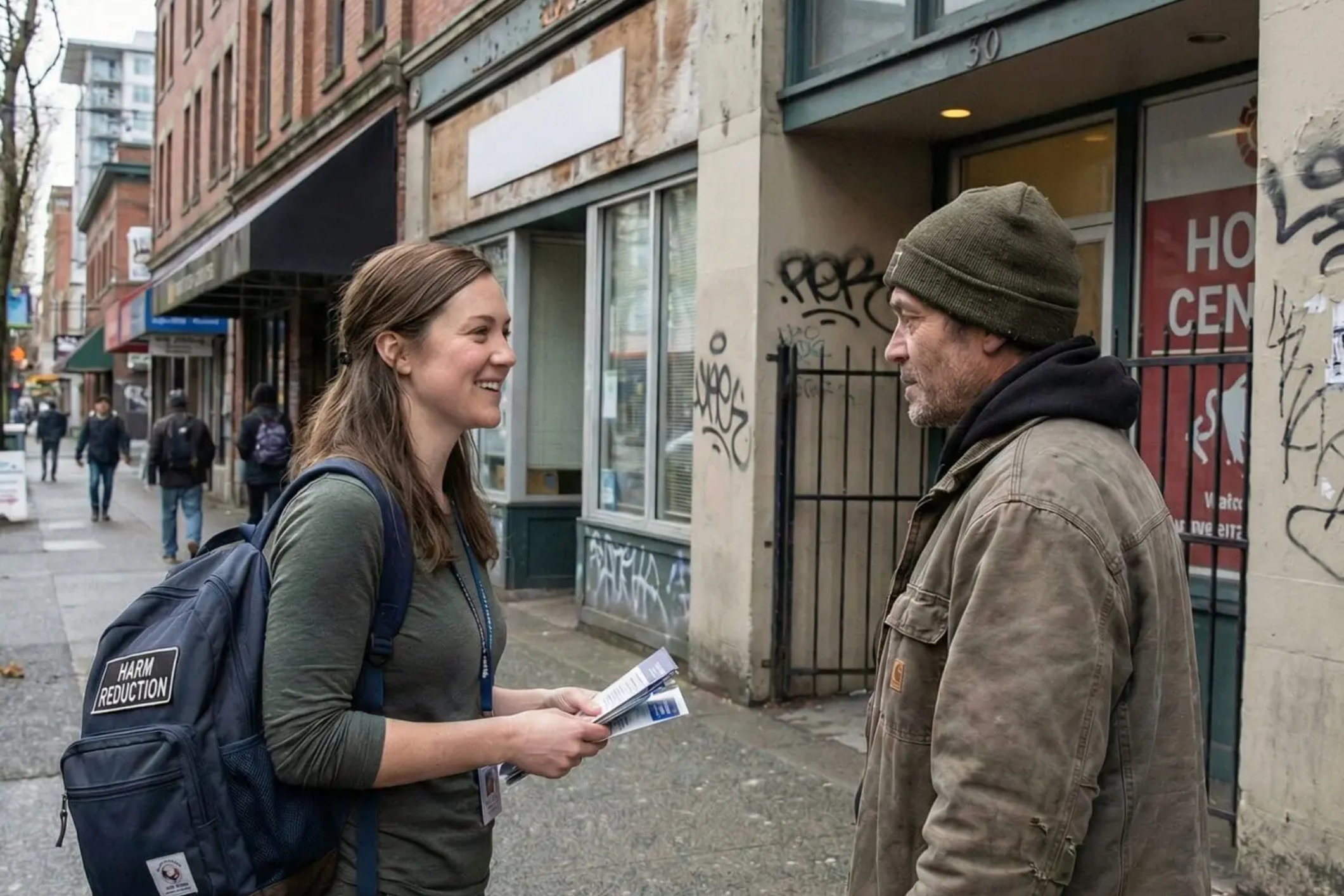
As a Mental Health and Substance Use Worker, you'll support individuals facing housing, mental health, and substance use challenges in a variety of community and care settings.
Working directly with clients, you will support them physically, mentally, emotionally, and socially through appropriate strategies and interventions to address their diverse needs.
Please note: This program is not eligible for the post-graduate work permit program.
Potential Employers
As a Mental Health and Substance Use Worker, you will support individuals facing housing, mental health, and substance use challenges in a variety of community and care settings.
Community Mental Health Centres
Indigenous Health Organizations
Outpatient Counselling Clinics
Primary Care Clinics
Supportive and Transitional Housing Facilities
Shelters
Youth Addiction Treatment Programs
Correctional Institutions
About the Program
As a Mental Health and Substance Use Worker, you'll support individuals facing housing, mental health, and substance use challenges in a variety of community and care settings.
Working directly with clients, you will support them physically, mentally, emotionally, and socially through appropriate strategies and interventions to address their diverse needs.
Potential Job Titles
- Community Mental Health and Addictions Worker
- Mental Health and Substance Use Worker
- Community Service Worker
- Addictions Worker
- Group Home Worker
- Family Service Worker
- Veteran Services Officer
- Women's Shelter Worker
Related Programs
Accreditation and Recognition
Stenberg College is designated by the BC government's Ministry of Advanced Education through the Private Training Institutions Regulatory Unit (PTIRU). This program is approved by the PTIRU of the Ministry of Post-Secondary Education and Future Skills. PTIRU is responsible for setting standards of quality and ensuring consumer protection. Stenberg College has also received the BC government's Education Quality Assurance (EQA) designation, which is BC's brand or "seal" of quality post-secondary education for public and private institutions.
Admission Requirements
- Grade 12 graduation or Mature Student Status (19 years of age or older)
- Grade 11-level English course or higher, or one of the following: Acceptable score in one of the approved LPR tests Accuplacer: Reading 230, Writing 230 and WritePlacer 4 CLBPT: No component less than 6; English challenge exam (minimum 70%)
- Successful completion of the online Computer Skills Entrance Test (minimum 70%)
- Completion of Stenberg College informational interview as part of the admissions procedure
- Completion of a Criminal Record Consent Form under the Criminal Record Review Act as part of the admissions procedure
- Acknowledgement of the 2-year sobriety recommendation as part of the admissions procedure
English is the language of instruction at Stenberg College. Therefore, all applicants must demonstrate an adequate level of English proficiency to ensure success in any program and courses by meeting one of the following minimum requirements:
- Evidence of completion of 3 years of full-time Secondary if Grades 8-12, or 2 years of Secondary if Grades 10-12, or 2 years of Post-Secondary education in English in a country where English is one of the principal languages. (Language courses cannot be included in this calculation)
- OR submit the results of one of the accepted English language proficiency tests: IELTS Academic (Overall 6.0, no component less than 5.5), Duolingo (Overall 105, no component less than 85), CELPIP (Overall 7, no component less than 6), TOEFL (Minimum overall score of 68 prior to Jan 21, 2026), TOEFL (Minimum overall score of 3.5 after Jan 21, 2026), CAEL (Minimum overall score of 50), Pearson PTE Academic (Minimum overall score of 50)
- OR Mature students (19+ years, Canadian citizen or permanent resident) who cannot access educational records can: a) complete an English Language Attestation to confirm completion of 3 years of full-time instruction in English, AND b) complete an Accuplacer Next Generation English Assessment with minimum scores of: Reading 230, Writing 230 and WritePlacer 4
Please note: This program is not eligible for the post-graduate work permit program.
Student Diversity
Stenberg supports diversity in our student population, and we hold one seat per program for a self-identified Indigenous applicant who meets admission requirements. If the seat remains unfilled at 12 weeks prior to the program start, the seat will be released and offered to other qualified applicants.
Program Courses
Orientation and Student Success Skills
This course will provide a comprehensive orientation to Stenberg College and the program you are enrolled in. In addition to orienting you to Stenberg College resources, policies, and procedures, this course will explore the transition to postsecondary education, learning styles, critical thinking, and citation and referencing. You will undertake self-evaluation, set learning and study strategy goals, and investigate the resources available to support you in achieving those goals.
Self-Care for the Support Worker
This course is designed to equip you with the knowledge and practical strategies needed to maintain personal well-being while working in emotionally demanding environments. You will explore the impact of stress, compassion fatigue, vicarious trauma, and burnout, and learn how these challenges can affect both professional effectiveness and personal health. Through guided activities and reflective exercises, you will develop individualized self-care plans that support physical, emotional, mental, and professional wellness. The course emphasizes the importance of boundaries, resilience, and ethical self-awareness, while introducing evidence-informed approaches to stress management and coping.
Mental Health & Substance Use Theory
This course provides you with an understanding of the role of a Mental Health & Substance Use Worker within mental health and addiction services. It addresses personal perspectives and beliefs, as well as historical and cultural perspectives on mental health and illness.
Mental Health Disorders & Treatment
This course offers a comprehensive look at mental health and substance use disorders, emphasizing effective treatment modalities and person-centered care approaches. You will gain an understanding of various mental health conditions and substance use disorders, including their symptoms and evidence-based treatment strategies.
Developing Therapeutic Relationships
This course focuses on the development and maintenance of therapeutic relationships. Gaining the theoretical understanding and practical skills required to address and support client needs and foster a supportive environment, promoting client well-being and self-sufficiency.
Psychosocial Rehabilitation & Recovery
This course will give you the practical strategies to develop, promote, facilitate, and evaluate psychosocial rehabilitation programs in accordance with industry standards. You will gain knowledge to ensure the smooth delivery and coordination of care while responding to the client's diverse needs in a professional and caring manner.
Personal Care & Health Promotion
This course offers an overview of adopting and encouraging a healthy lifestyle. It focuses on developing personal care techniques that promote comfort, safety, and independence. You will gain knowledge of methods for supporting overall client well-being and will be introduced to concepts of medication management and critical safety precautions.
Trauma Informed Care & Harm Prevention
This course will give you the knowledge and practical skills needed to work with vulnerable and marginalized populations by using a trauma-informed care approach. While exploring the impact and signs of trauma, you will develop the necessary skills to integrate trauma-informed care to promote recovery while also reducing the risk of re-traumatization.
Child and Youth Care
This course introduces you to the foundational principles and practices of child and youth care within the mental health and substance use field. Using a trauma-informed approach, you will explore the developmental and environmental factors that shape the mental health of children and youth. Emphasis is placed on social justice, cultural safety, and Indigenous perspectives, including an examination of the lasting impacts of colonization and residential schools on Indigenous communities.
Career Search Strategies
This course is offered in an online format. You will learn to network effectively (online and in person), to search and apply for jobs, and to prepare targeted resumes and cover letters. You will be provided with coaching and individualized instructor feedback on your resume, cover letter, and interview skills.
Practicum
The Consolidated Practice Experience will provide students with the opportunity to apply their learned theory and practical skills in a school setting. Making connections between theory and practice is a vital aspect of learning; self-reflection and self-evaluation are important skills for continued professional growth and development. In addition to working in a school setting, students will reflect on specific topics and have thoughtful discussions with a Stenberg College Monitor.
Workplace Hazardous Materials Information (WHMIS)
WHMIS provides information about materials in the workplace that can be hazardous, such as cleaning agents, compressed gases and flammable materials.
Provincial Violence Prevention (PVPC)
The Provincial Violence Prevention Training Curriculum will teach you to recognize and respond to violent situations and learn about different types of violence and strategies for dealing with the risks in a variety of health care contexts. The Provincial Violence Prevention Curriculum has been developed by a team of experts from WorkSafe BC, the Occupational Health & Safety Agency for health care in BC, as well as BC health authorities and healthcare unions. This training and certification is offered in collaboration with Fraser Health Authority.
Food Safety Training
You’ll learn how to prepare food in a way that protects customers from injury or illness. Some of the topics covered are food-borne diseases, personal hygiene, and safe procedures for storing.
Personal & Professional Development Certificate
The Personal and Professional Development (PPD) Skills Certificate is a combination of interactive online modules. In addition to the Soft Skills Development module, you will develop your ability to work with diverse clients, patients, and colleagues through the Gender Diversity and Sexual Orientation; Disability, Neurodiversity, and Accessibility; Anti-Indigenous Racism Response and Indigenous Gender Diversity; and Anti-Racism modules.
Student Support
- Academic tutoring
- Assessment and skill development support
- Open study skills tutorials
- Typing practice support
- One-on-one student support coaching sessions
- English language learning support
- Online learning resources
- Online academic journals and databases
- Campus life events
Stories from our Mental Health & Substance Use Worker grads
Loading stories...
Ask a Program Advisor
I understand that by submitting this form, I agree to receive periodic emails, phone calls and text messages (SMS) from Stenberg College. See our Privacy Policy. At any time you can opt out of SMS messaging by replying STOP. See our SMS Terms. Message and data rates may apply.
We're Here to Help
Our admissions advisors are here to help you find the right program and navigate your path to a rewarding career.
I understand that by submitting this form, I agree to receive periodic emails, phone calls and text messages (SMS) from Stenberg College. See our Privacy Policy. At any time you can opt out of SMS messaging by replying STOP. See our SMS Terms. Message and data rates may apply.
We're Here to Help
Our admissions advisors are here to help you find the right program and navigate your path to a rewarding career.
We use cookies to improve your experience and personalize ads. See our Privacy Policy.