
Education Assistant
Online theory with in-person labs and practicums
Up to $38.90/hr (including 12% in lieu of benefits and depending on the school district)
Start: March & September
37 weeks, including 8 weeks of practicum
$9,990
Graduates are eligible for advanced entry to Athabasca University Bachelor of Professional Arts degree (Governance, Law and Management or Human Services major)
About the Career
There are few things in life as rewarding as helping individuals with exceptionalities reach their full potential. Under the supervision of elementary and/or secondary school teachers, Education Assistants (EAs) assist students who may require additional support with behaviours, special needs, academics or English Language Learning (ELL).
Graduates of Stenberg's Education Assistant program are prepared to work in:
- Public, private, and faith-based schools
- After school programs
- Childcare centres
- Community or youth drop-in centres
- Residential settings, parks and recreation programs
- Home and respite care
- And as Behaviour Interventionists
Stenberg's Education Assistant graduates are in high demand by school districts throughout British Columbia.
Full Program Tuition
$9,990
Includes POPARD certifications, First Aid, ASL, and more.*Cannot be combined with any other offers.
Potential Employers
Under the supervision of elementary and/or secondary school teachers, Education Assistants (EAs) assist students who may require additional support with behaviours, special needs, academics or English Language Learning (ELL).
Public, private, and faith-based schools
After school programs
Childcare centres
Community or youth drop-in centres
Residential settings, parks and recreation programs
Home and respite care
Behaviour Interventionists
About the Program
Unlike most post-secondary programs, classes at Stenberg are small, allowing instructors to be more attentive to your needs and build relationships with you. The instructors for the Education Assistant Program are committed to your success and ensure you're comprehending the material and keeping up. The online Education Assistant (EA) program has identical content and learning outcomes as a traditional class program.
Something that sets our program apart is the inclusion of two certifications from the Provincial Outreach Program for Autism and Related Disorders (POPARD):
- Introduction to Autism Spectrum Disorder
- Applied Behaviour Analysis
These certifications better prepare you for the career and to provide the support that students with exceptionalities deserve. They also make you more competitive for hiring.
Ultimately, it is the integration of theory and practice, particularly during eight weeks of practicum in elementary and/or high schools, that will prepare you to become an effective Education Assistant. During the program, you will constantly apply practice to theory as you consider and respond to practical questions and theoretical situations. Not only does this make your understanding of concepts and theories less abstract, but it prepares you for your practicum placement(s) at the end of the program.
Related Programs
Post-Graduation Pathways
Stenberg Education Assistant graduates have many options available to them after program completion! Read below to learn more about our articulation agreements.
Athabasca University
Our Education Assistant Diploma leads to a degree
Your Educational Journey:
Stenberg College Education Assistant Diploma
30 transfer credits
Athabasca University Undergraduate Credits
30 credits
Athabasca University BPA-HSRV or BPA-GLM Degree
60 credits
Graduates of our Education Assistant Diploma program are eligible for advanced entry into Athabasca University's Bachelor of Professional Arts degree, majoring in Governance, Law and Management or Human Services.
Stenberg College's Education Assistant Diploma gives graduates 30 Athabasca University transfer credits, leaving only 30 Athabasca credits prior to program admission plus 60 credits of course work at Athabasca to earn your bachelor's degree. You can complete your entire Athabasca degree online.
* This articulation is based on a review of Stenberg College's August 2019 Special Education Assistant curriculum.

Simon Fraser University
Using your Stenberg Diploma and Athabasca degree to become a BC Certified Teacher
A degree from Athabasca University is acceptable for application into Simon Fraser University's Professional Development Program (PDP) or Professional Linking Program (PLP). Both programs allow you to become a BC Certified Teacher and teach elementary and/or secondary school students in public and independent schools.
SFU Professional Development Program (PDP)
Graduates of the 16-month program are recommended by Simon Fraser University to the Teacher Certification Branch of the BC Ministry of Education for a Teaching Certificate. There is also an option to complete a Bachelor of Education (BEd) as a second degree, without adding extra time or cost to the program.
SFU Professional Linking Program (PLP) for Education Assistants
The Professional Linking Program is a unique teacher education program that enables working paraprofessionals, student support workers, para-educators (e.g., education assistants, child and youth care workers, counsellors, settlement workers), independent schools educators, and Francophone teachers working with letters of permission to become certified as teachers in British Columbia.
* Please note: admission into either program has its own prerequisites and admission criteria. Admission is by application and is not guaranteed.
Accreditation and Recognition
Stenberg College is designated by the BC government's Ministry of Advanced Education through the Private Training Institutions Regulatory Unit (PTIRU). This program is approved by the PTIRU of the Ministry of Post-Secondary Education and Future Skills. PTIRU is responsible for setting standards of quality and ensuring consumer protection. Stenberg College has also received the BC government's Education Quality Assurance (EQA) designation, which is BC's brand or "seal" of quality post-secondary education for public and private institutions.
Admission Requirements
- Grade 12 graduation or Mature Student Status (19 years of age or older)
- Grade 11-level English course or higher, or one of the following:Acceptable score in one of the approved LPR tests as noted belowAccuplacer: Reading 230, Writing 230 and WritePlacer 4CLBPT: No component less than 6English challenge exam (minimum 70%)
- Passing Stenberg College entrance examination for Math (minimum 70%) or the following in lieu:Evidence of any Math 11 or higher
- Successful completion of the online Computer Skills Entrance Test (minimum 70%)
- Completion of a criminal record check through the Criminal Records Review Program (CRRP) online system at the time of program commencement will be required. Students will be provided with details on how to submit their criminal record check with a vulnerable sector search at the start of the program. Should a student wish to complete this step prior to the program start date, please contact your Program Advisor.
- Proof of 50 hours of volunteer or paid experience working with children (This requirement can be met whilst parenting own children) - Program Advisors will work with students to obtain this
- Reference letter stating suitability to work with children - Program Advisors will work with students to obtain this
Preference will be given to applicants who have volunteer or paid experience working with children with special needs in school or related settings.
*Please note: Education Assistant is not a career listed under the British Columbia Professional Regulatory Authorities.
English is the language of instruction at Stenberg College. Therefore, all applicants must demonstrate an adequate level of English proficiency to ensure success in any program and courses by meeting one of the following minimum requirements:
- 1) Evidence of completion of 3 years of full-time Secondary if Grades 8-12, or 2 years of Secondary if Grades 10-12, or 2 years of Post-Secondary education in English in a country where English is one of the principal languages. (Language courses cannot be included in this calculation)
- OR 2) Submit the results of one of the accepted English language proficiency tests at the score level specific to the program as listed in the admission requirements below:IELTS Academic – Overall band score of 6.0 with no component less than 5.5Duolingo – Overall score of 105 with no component less than 85CELPIP – Overall score of 7 with no component less than 6TOEFL – Minimum overall score of 68CAEL – Minimum overall score of 50Pearson PTE Academic - Minimum overall score of 50
- OR 3) Mature students that are 19 years of age or older at the start of the program and a Canadian citizen or permanent resident who cannot access their educational records or provide sufficient evidence of secondary or post-secondary education as outlined above can:a. Complete an English Language Attestation to confirm completion of 3 years of full-time instruction in English in a country where English is one of the principal languages, ANDb. Complete an Accuplacer Next Generation English Assessment with minimum scores of: Reading 230, Writing 230 and WritePlacer 4
Evidence may be demonstrated by providing a high school transcript, completion of a provincial Adult Graduation program, permanent student record, GED, or by providing international education credentials confirming medium of instruction in English as recognized through WES, ICES, or IQAS. Alternatively, where 2 years of post-secondary education are being determined based on credits, it is expected that the student has taken studies with a minimum of 18 credits per academic year and/or indicates completion of a minimum of 36 credits in total. For regulated programs, language proficiency requirements, including permitted tests and scores dictated by the regulatory body, will supersede all else.
Additional note
This program is not eligible for Canada's Post-Graduate Work Permit Program.
Student Diversity
Stenberg supports diversity in our student population, and we hold one seat per program for a self-identified Indigenous applicant who meets admission requirements. If the seat remains unfilled at 12 weeks prior to the program start, the seat will be released and offered to other qualified applicants.
Program Courses
Orientation and Student Success Skills
This course will provide a comprehensive orientation to Stenberg College and the Education Assistant Program. During Orientation and Student Success Skills, you will explore transitioning as a college student, review learning styles, enhance critical thinking, and familiarize you with the resources available for your use. This course covers student success skills where you will learn effective study habits (specifically to improving both reading and writing skills) based on your own personal learning style. Life skills exercises are also integral to the course, teaching communication, accountability, teamwork, self-awareness and building an understanding of the impact you have on others.
Interpersonal Communications I
This course assists you with developing important foundational skills to address the complexities of communicating in professional work environments. You will have the opportunity to reflect on your own communication skills in relation to your role. It will focus on practical communication strategies to promote effective communication between yourself, students and co-workers in the school environment. You will gain an awareness of your communication style.
Working in Canadian Schools
This course provides you with an overview of the BC Public School System and examines historical considerations that gave rise to current practices. You will also explore the roles and responsibilities of the Education Assistant within inclusive educational settings. Team approaches will be considered for enhancing your understanding of the school experience. You will gain an awareness of diversity in Canadian classrooms and be introduced to the importance of trauma informed practices.
Life Span Development
As an Education Assistant, you will be supporting diverse learners from different age groups. As a result, you will require an understanding of how children and adolescents grow and develop so you can provide effective support based on developmental considerations. To support you in this learning, you will examine important concepts used to explain human development as well as explore theories that describe how children grow and develop. By the end of the course you will have the beginnings of a personal philosophy of child development that you will continue to construct as you advance through the EA program.
Theory and Principles of Learning
The purpose of the Theory and Principles of Learning course is to provide you with a general understanding and awareness of the brain and various types of teaching and learning strategies, focusing on the brain and how learning is developed. You will develop awareness for your own individual learning style; this will provide you with opportunities to explore various teaching and learning strategies used in classroom settings.
Supporting Students with Exceptionalities
In this course you will examine students with exceptionalities. You will view them from the perspective of what it means to be a diverse learner. You will learn about behavioural, communication, intellectual, physical, and multiple exceptionalities that you may encounter as an EA and various support strategies to enable student success. Emphasis will be placed on developing ethical and professional approaches to care as you gain skills to help you understand, respect, and promote the self-determination of individuals with exceptionalities.
Observation and Recording
The purpose of the Observation and Recording course is to provide you with the ability to engage in meaningful observation and to purposefully capture information contained in children's behaviour. You will be introduced to a general understanding of the theory of observation and recording focusing on the purpose, standards, influences, and methods used in a classroom setting. You will develop an awareness of professional conduct through understanding the importance of confidentiality and an individual's rights to privacy. The course will focus on the general characteristics of each recording method and you will apply your knowledge through general observation principles and recording methods outside of the classroom setting.
Supporting and Adapting Curriculum
You will examine the philosophy, goals, and content of curriculum in elementary and secondary schools, with a focus on English language arts, social studies, mathematics and science. You will then examine the role of the EA and demonstrate ways to support and adapt the curriculum under the supervision of the classroom teacher.
Augmentative and Alternative Communication and Assistive Technology
In this course you will explore Augmentative and Alternative Communication (AAC) and recognize it as essential for children experiencing a Complex Communication Need (CCN). Communicating using AAC enhances quality of life, creates opportunities for social engagement as well as providing a child with the ability to control his or her environment – a fundamental human ability. You will also examine the Speech and Language Pathologist Assistant's responsibilities. Emphasis will be placed on effective implementation of the SLP plan using evidence-based practices so you will develop skills required to effectively support a child's communication using AAC.
Interpersonal Communications II
This course assists you with developing the skills and knowledge to communicate effectively. Communication competence, the ability to convey meaning, share ideas, and connect with others successfully, forms the foundation of strong interpersonal skills.
Understanding and Supporting Behaviour
In this course you will have the opportunity to better understand and support behaviour. You will look at behaviour through a trauma informed lens and discuss possible underlying reasons for behaviour. Additionally, you will explore ways to proactively prevent behaviour as well as support students who are experiencing challenging behaviour.
POPARD
Delivered by the Provincial Outreach Program for Autism and Related Disorders (POPARD), this course is comprised of two week-long workshops: Introduction to Autism Spectrum Disorder and Applied Behaviour Analysis. This course reflects current research and evidence-based practice in teaching students with ASD. In addition, research-based methods of effective adult instruction are used in this course. These include practical hands-on activities, demonstration, coaching and application exercises as well as a variety of ways of evaluating participant learning. Completion of this course provides the participant with an overview of ABA history and theory, with an emphasis on practical applications in school settings. Participants will have the opportunity to practice teaching using discrete trial and task analysis formats. They will also see how ABA principles are applied to other teaching situations and to program development for students with autism spectrum disorders.
Career Search Strategies
In this course, you learn to network effectively, prepare targeted resumes and cover letters, and follow up in your job search. You will also be provided with a personalized critique of your resume, cover letter, and online profiles and will be given the opportunity to practice and perfect interview skills.
Consolidated Practice Experience
The consolidated practice experience will provide you with the opportunity to apply your learned theory and practical skills in a school setting. Making connections between theory and practice is a vital aspect of learning; self-reflection and self-evaluation are important skills for continued professional growth and development. In addition to working in a school setting, you will complete weekly reflective journals. These reflective journals will provide an opportunity for critical reflection, and ongoing feedback from an assigned Stenberg College Practicum Monitor.
Standard First Aid + Basic Life Support
You will receive Red Cross First Aid Certification in Cardiopulmonary Resuscitation (CPR) and Automated External Defibrillation (AED). This industry standard certification is valid for three years.
Provincial Violence Prevention Training Curriculum
The Provincial Violence Prevention Training Curriculum will teach you to recognize and respond to violent situations and learn about different types of violence and strategies for dealing with the risks in a variety of health care contexts. The Provincial Violence Prevention Curriculum has been developed by a team of experts from WorkSafe BC, the Occupational Health & Safety Agency for health care in BC, as well as BC health authorities and healthcare unions. This training and certification is offered in collaboration with Fraser Health Authority.
Alternative & Augmentative Communication & Assistive Technology
During this 6 hours of training, you will learn about and use various types of technology that support participation, communication, and learning in school environments during a hands-on lab.
POPARD: Introduction to Autism Spectrum Disorders and Applied Behaviour Analysis
You will receive a certificate from the Provincial Outreach Program for Autism and Related Disorders (POPARD) for each of the workshops within the POPARD course: Introduction to Autism Spectrum Disorders and Applied Behaviour Analysis. HR Departments from multiple school boards have confirmed that applicants with Autism Spectrum Disorder and Applied Behaviour Analysis Training and certification are favored for hiring. Furthermore, eligibility for internal postings will often rely on this training and certification.
Personal & Professional Development Skills Certificate
The Personal and Professional Development (PPD) Skills Certificate is a combination of interactive, online modules and synchronous follow-up discussions that apply the general module content to the specifics of your program and future career. In addition to the Soft Skills Development module, you will develop your ability to work with diverse clients, patients, and colleagues through the Gender Diversity and Sexual Orientation; Disability, Neurodiversity, and Accessibility; Anti-Indigenous Racism and Indigenous Gender Diversity; and Anti-Racism modules.
Body Mechanics & Back Safety
You will be educated in proper body movement to prevent and correct poor posture, reduce stress on ligaments, joints and tendons and enhance physical capabilities. Proper body mechanics and back safety will enhance longevity and success in the workplace and will help ensure that transfers and positioning are done in a manner that is safe and appropriate for everyone. Please note: While this training follows best practices, graduates may also be required to learn and follow workplace specific protocols.
American Sign Language (ASL) Fundamentals
The purpose of this interactive workshop is to introduce Education Assistants to the fundamentals of basic sign language required to support students who use sign language to communicate. You will be encouraged to cultivate an appreciation of the History and Culture of the ASL Community for the purposes of understanding the context of those who use sign language to communicate. You will be shown how to sign and practice basic vocabulary using interactive learning and activities. You will also explore strategies to support ASL in the classroom and recognize ways to set up an inclusive classroom.
Sensory Awareness
This workshop provides basic awareness on sensory issues and dysfunction. Practical strategies will be explored and you will generate unique strategies in supporting individuals with sensory needs.
Boardmaker
This workshop introduces you to the software tool Boardmaker. The program uses clip art of picture communication symbols which are used in creating printed communication boards, device overlays, worksheets, and schedules. Boardmaker can be used to create a range of support documents including timetables, labels, schedules etc. for a single student or an entire class.
Personal Care
In this course, you will integrate the theory and practice of providing personal care for students with specialized needs. This course will include personal hygiene, oral care, assisting with bathroom routines, and proper body mechanics for lifting and transferring.
Student Support
- Academic tutoring
- Assessment and skill development support
- Open study skills tutorials
- Typing practice support
- One-on-one student support coaching sessions
- English language learning support
- Online learning resources
- Online academic journals and databases
- Campus life events
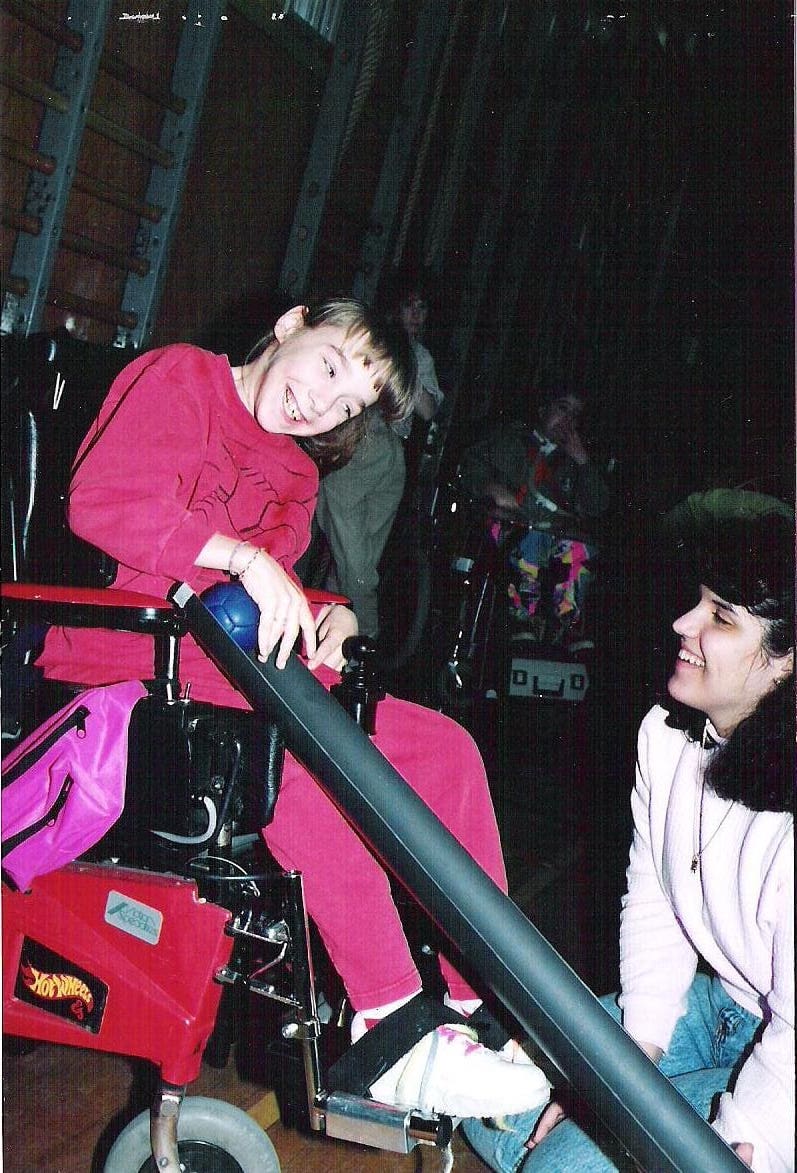
Stories from our Education Assistant grads









Loading stories...
Ask a Program Advisor
I understand that by submitting this form, I agree to receive periodic emails, phone calls and text messages (SMS) from Stenberg College. See our Privacy Policy. At any time you can opt out of SMS messaging by replying STOP. See our SMS Terms. Message and data rates may apply.
We're Here to Help
Our admissions advisors are here to help you find the right program and navigate your path to a rewarding career.
I understand that by submitting this form, I agree to receive periodic emails, phone calls and text messages (SMS) from Stenberg College. See our Privacy Policy. At any time you can opt out of SMS messaging by replying STOP. See our SMS Terms. Message and data rates may apply.
We're Here to Help
Our admissions advisors are here to help you find the right program and navigate your path to a rewarding career.
We use cookies to improve your experience and personalize ads. See our Privacy Policy.